- Art music primarily refers to classical traditions including modern as well as historical classical music forms, or others forms like from different parts of the world, which focus on formal styles, and require the listerner to have full attention of the piece of music.
- Strictly art music is considered primarily a written musical tradition, preserved in some form of music notation, as opposed to being transmitted through voice, by rote, or in recordings like popular and traditional music.
- Art music is normally instrumental, and when vocals are included they have very poetic, political, or religious overtones.
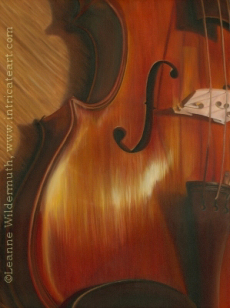
<-- This is an example of art music which is develved to sounding modern as the are not plainly clasical sounding instromnets like in this song theres a voilin but there is also a beat which makes it sound not in the clasical genre but more on the techno theme.
Popular Music- The usual representation of "popular music" is music belonging to any of a number of musical styles that are accessible to the general public and are disseminated by one or more of the mass audience.
- The very distinction between classical and popular music has sometimes been blurred in the border regions, for instance minimalist music and light classics.

Traditional Music

- It was Transmitted through oral tradition
- The music was often related to national culture.
- They commemorate historical and personal events.
- As a side-effect, the following characteristics are sometimes present:
- Lack of copyright on songs.
- Fusion of cultures
- Non-comercial
(Source) ^for Above^
List of some of the most popular genres:
 |
| Lady Gaga |
- Pop (Popular)
- Popularity: Continuous worldwide since emergence
- Origin: 1950's UK and US.
- Sub-Genres: Baroque pop, Bubblegum pop, Christian pop, Dance-pop, Electropop, Europop, Indie pop, Operatic pop, Power pop, Soundtrack, Sophisti-pop, Synthpop, Space age pop, Sunshine pop, Traditional pop and Teen pop.
- Characteristics:
- an aim of appealing to a general audience, rather than to a particular sub-culture or ideology.
- an emphasis on craftsmanship rather than formal "artistic" qualities.
- an emphasis on recording, production, and technology, over live performance.
- a tendency to reflect existing trends rather than progressive developments.
- much pop music is intended to encourage dancing, or it uses dance-oriented beats or rhythms. (Source)
- Indie (Independent)
 |
| Vampire Weekend |
- Popularity: Mainstream in UK in late 2000's
- Origin: Early 1980s, United Kingdom, United States and Canada
- Sub-Genres: Garage punk, riot grrrl, indie pop, emo, garage rock/post-punk revival, noise pop, dance-punk,New Weird America, Baroque pop, lo-fi,sadcore, C86, math rock
- Characteristics:
- Origin: Early 1980s, United Kingdom, United States and Canada
- Sub-Genres: Garage punk, riot grrrl, indie pop, emo, garage rock/post-punk revival, noise pop, dance-punk,New Weird America, Baroque pop, lo-fi,sadcore, C86, math rock
- Characteristics:
- Indie rock, derived from "independent", describes the small and relatively low budget labels on which it is released and the do-it-yourself attitude of the bands and artists involved.
- Although distribution deals are often struck with major corporate companies these labels and the bands they host have attempted to retain their autonomy, leaving them free to explore sounds, emotions and subjects of limited appeal to large, mainstream audiences.
- The influences and styles of the artists has been extremely diverse, including punk, psychedelia, rock and country.
- The terms alternative rock and indie rock were used interchangeably in the 1980s, but after many alternative bands followed Nirvana into the mainstream in the early 1990s it began to be used to distinguish those bands, working in a variety of styles, that did not pursue or achieve commercial success. (Source)
- Rock
- Popularity: Extremely mainstream worldwide, since 1950s
- Origin: 1950s and 1960s, United Kingdom and United States
- Sub-Genres: Alternative rock, Art rock, Baroque pop, Beat music, Britpop, Emo, Experimental rock, Garage rock, Glam rock, Grindcore, Group Sounds, Grunge, Hard rock and more.
- Characteristics:
- Origin: 1950s and 1960s, United Kingdom and United States
- Sub-Genres: Alternative rock, Art rock, Baroque pop, Beat music, Britpop, Emo, Experimental rock, Garage rock, Glam rock, Grindcore, Group Sounds, Grunge, Hard rock and more.
 |
| Iggy Pop |
- The sound of rock is traditionally centered around the electric guitar, which emerged in its modern form in the 1950s with the popularization of rock and roll.
- The sound of the electric guitar in rock music is typically supported by the electric bass guitar pioneered in jazz music in the same era, and percussion produced from a drum kit that combines drums and cymbals.
- This trio of instruments has often been complemented by the inclusion of others, particularly keyboards such as the piano, Hammond organ and synthesizers.
- A group of musicians performing rock music is termed a rock band or rock group and typically consists of between two and five members. Classically, a rock band takes the form of a quartet whose members cover one or more roles, including vocalist, lead guitarist, rhythm guitarist, bass guitarist, drummer and occasionally that of keyboard player or other instrumentalist. (Source)
Chosen Genre:
I have chosen Indie-Rock as my genre for this music video project

